Parables of Jesus
Forty-three stories, grouped by which Gospels tell them — each with its punchline quoted exactly where verified, its setting, and its meaning.
The inventory follows the standard 43-parable count (7 shared by Matthew, Mark, and Luke; 5 shared by Matthew and Luke; 12 unique to Matthew; 2 unique to Mark; 17 unique to Luke). Punchline quotations are direct King James Version (KJV, public domain) wording only where the exact wording was verified against Bible sources on 2026-09-26; where it was not individually verified, the moral is given as a labeled paraphrase. Chapter and verse references were verified.
In Matthew, Mark and Luke (triple tradition)
New Cloth on an Old Garment
Punchline (paraphrase): You cannot patch the new covenant onto the old religious system; the patch tears away worse than before. Story: Jesus says no one sews a piece of unshrunk cloth onto an old garment, because the patch pulls away and makes the tear worse. Meaning: Jesus’ teaching — the new covenant, grace, the kingdom — is incompatible with the old forms of Pharisaism; it needs its own vessel. Told in: Matthew 9:16 (also Mark 2:21; Luke 5:36) Audience/Occasion: The disciples of John the Baptist (with Pharisees present) question Jesus about why his disciples don’t fast; told at the feast in Matthew (Levi)’s house in Capernaum.
New Wine in Old Wineskins
Punchline (paraphrase): New wine must go into new wineskins, or the skins burst and both are lost. Story: New wine poured into old, brittle wineskins bursts them as it ferments; both wine and skins are ruined. New wine belongs in fresh skins. Meaning: The life and teaching of Jesus cannot be contained in old religious structures. Told in: Matthew 9:17 (also Mark 2:22; Luke 5:37–38) Audience/Occasion: Same as above — John’s disciples questioning about fasting at Levi’s feast in Capernaum.
The Sower (Sower and the Soils)
Punchline (paraphrase): The seed is the word of God; only the good soil — those who hear, hold fast, and persevere — bears fruit. Story: A sower scatters seed; some falls on the path and birds eat it, some on rocky ground and withers, some among thorns and is choked, and some on good soil, yielding thirty, sixty, a hundredfold. Jesus himself interprets it: the soils are kinds of hearers — the hardened, the shallow, the distracted, and the fruitful. Meaning: The kingdom’s word meets four responses; fruitfulness depends on the condition of the heart. Told in: Matthew 13:3–9, interpretation 13:18–23 (also Mark 4:3–9, interpretation 4:14–20; Luke 8:5–8, interpretation 8:11–15) Audience/Occasion: Great multitudes gathered by the Sea of Galilee; Jesus teaches from a boat. Opening parable of the kingdom discourse.
The Mustard Seed
Punchline (paraphrase): The kingdom begins as the smallest of seeds but grows larger than all garden plants, until birds nest in its branches. Story: A man sows a mustard seed — the smallest of seeds — yet it grows into the greatest of herbs, becoming tree-like, and the birds of the air lodge in its branches. Meaning: The kingdom of God starts insignificantly but grows to surprising, sheltering greatness. Told in: Matthew 13:31–32 (also Mark 4:30–32; Luke 13:18–19) Audience/Occasion: Same kingdom discourse by the Sea of Galilee (Matthew 13; Mark 4); in Luke, during the Perean ministry.
The Lamp Under a Basket
Punchline (paraphrase): Light is meant to be seen, not hidden — disciples are to let their light shine openly before others. Story: No one lights a lamp and hides it under a basket or a bed; it is put on a stand so all in the house see the light. Meaning: Jesus’ disciples — and his teaching — must be visible witnesses; truth is not to be concealed. Told in: Matthew 5:14–16 (also Mark 4:21–22; Luke 8:16–17; Luke 11:33–36) Audience/Occasion: The multitudes in the Sermon on the Mount (Matthew 5); repeated in the parables discourse (Mark 4; Luke 8) and in controversy with the Pharisees (Luke 11).
The Wicked Tenants (Wicked Husbandmen)
Punchline: “Jesus saith unto them, Did ye never read in the scriptures, The stone which the builders rejected, the same is become the head of the corner: this is the Lord’s doing, and it is marvellous in our eyes?” — and “Therefore say I unto you, The kingdom of God shall be taken from you, and given to a nation bringing forth the fruits thereof.” (Matthew 21:42–43, KJV) Story: A landowner plants a vineyard, leases it to tenants, and goes away. When he sends servants to collect fruit, the tenants beat, kill, and stone them; finally he sends his son, and they kill him to seize the inheritance. The owner destroys the tenants and gives the vineyard to others. Meaning: Israel’s leaders have rejected God’s prophets and will reject his Son; the kingdom’s stewardship passes to others who bear fruit. The rejected stone (Christ) becomes the cornerstone (Psalm 118:22–23). Told in: Matthew 21:33–46 (also Mark 12:1–12; Luke 20:9–19) Audience/Occasion: Chief priests, scribes, and elders in the temple, Tuesday of Holy Week, after they challenged his authority — they perceived the parable was aimed at them.
The Budding Fig Tree
Punchline (paraphrase): When you see the fig tree’s leaves sprout you know summer is near — so when you see these signs, know the Son of Man’s coming (the kingdom) is near. Story: Learn the lesson of the fig tree: when its branch is tender and puts forth leaves, summer is near. So when you see the predicted signs, know the end is at hand. Meaning: The signs Jesus gives are reliable indicators of his coming and the kingdom, like seasonal signs. Told in: Matthew 24:32–35 (also Mark 13:28–32; Luke 21:29–33) Audience/Occasion: The disciples privately on the Mount of Olives — the Olivet Discourse, Tuesday of Holy Week.
In Matthew and Luke only
The Wise and Foolish Builders
Punchline: “Therefore whosoever heareth these sayings of mine, and doeth them, I will liken him unto a wise man, which built his house upon a rock” (Matthew 7:24, KJV) Story: Everyone who hears Jesus’ words and does them is like a wise man building on rock; the rain, floods, and winds beat the house and it stands. Everyone who hears and does not do them is like a foolish man building on sand; the storm comes and it falls with a great crash. Meaning: Obedience to Jesus’ teaching is the only foundation that survives judgment. Told in: Matthew 7:24–27 (also Luke 6:47–49) Audience/Occasion: The multitudes — the closing illustration of the Sermon on the Mount (Matthew) / Sermon on the Plain (Luke).
The Children in the Marketplace
Punchline (paraphrase): “This generation” is like unpleasable children — they reject both John’s austerity and Jesus’ feasting; but wisdom is proved right by what it produces. Story: Children sit in the marketplace and call to one another: they played wedding music and no one danced, they sang funeral dirges and no one mourned. John came fasting and they called him demon-possessed; the Son of Man came eating and drinking and they called him a glutton and a friend of tax collectors and sinners. Meaning: A perverse generation rejects God’s messengers no matter their style; God’s wisdom is vindicated by its fruit. Told in: Matthew 11:16–19 (also Luke 7:31–35) Audience/Occasion: The crowds, after Jesus answers the disciples of John the Baptist about whether he is the Coming One (Galilee).
The Leaven
Punchline (paraphrase): Like leaven hidden in dough, the kingdom quietly permeates everything until the whole is leavened. Story: A woman hides leaven in three measures of meal until the whole batch is leavened. Meaning: The kingdom’s influence is hidden but pervasive and unstoppable. Told in: Matthew 13:33 (also Luke 13:20–21) Audience/Occasion: The kingdom discourse by the sea (Matthew 13); in Luke, during the later Galilean/Perean teaching.
The Lost Sheep
Punchline: “I say unto you, that likewise joy shall be in heaven over one sinner that repenteth, more than over ninety and nine just persons, which need no repentance.” (Luke 15:7, KJV) Story: A shepherd with a hundred sheep loses one; he leaves the ninety-nine and searches until he finds it, then calls friends to rejoice with him. Meaning: God actively seeks the straying, and heaven rejoices over one repentant sinner. Told in: Matthew 18:12–14 (also Luke 15:3–7) Audience/Occasion: In Matthew — the disciples in Capernaum, after “who is the greatest,” applied to straying “little ones.” In Luke — Pharisees and scribes grumbling that Jesus receives tax collectors and sinners; first of the three “lost” parables.
The Faithful and Wise Servant (vs. the Wicked Servant)
Punchline (paraphrase): The master comes at an unexpected hour; the servant found faithfully doing his duty is blessed, the abusive and drunken one is cut off. Story: A master sets a servant over his household to give food in due season. If the master returns unexpectedly and finds him faithful, he is made ruler over all; if the servant concludes his master is delayed, and beats his fellow servants and gets drunk, the master comes suddenly and appoints him his portion with the hypocrites. Meaning: Watchfulness and faithful stewardship in view of Christ’s return; unfaithfulness brings judgment. Told in: Matthew 24:45–51 (also Luke 12:42–48) Audience/Occasion: The disciples — Olivet Discourse (Matthew); in Luke, after Peter asks whether the parable of watchfulness is for them or for all (Luke 12:41).
Unique to Matthew
The Wheat and the Tares (Weeds)
Punchline (paraphrase): Let both grow together until the harvest; at the end of the age the angels will gather out the wicked and burn them, while the righteous shine like the sun. Story: An enemy sows tares among a man’s wheat at night. The servants want to pull them, but the master forbids it lest the wheat be uprooted; at harvest the reapers will first bind the tares to burn, then gather the wheat into the barn. Jesus interprets: the field is the world, the good seed are the sons of the kingdom, the tares the sons of the evil one, the harvest the end of the age. Meaning: Good and evil coexist in the world and the kingdom until the final judgment, when they will be separated. Told in: Matthew 13:24–30, interpretation 13:36–43 Audience/Occasion: The multitudes by the sea, then the interpretation privately to the disciples in the house.
The Hidden Treasure
Punchline (paraphrase): The kingdom is worth selling everything you own to obtain. Story: A man finds treasure hidden in a field; in his joy he hides it again, sells all he has, and buys that field. Meaning: The kingdom’s value dwarfs every other possession; total commitment is the rational response. Told in: Matthew 13:44 Audience/Occasion: The disciples in the house (the second half of the Matthew 13 discourse).
The Pearl of Great Price
Punchline (paraphrase): One pearl of supreme worth justifies selling all to buy it — the kingdom’s supreme worth demands total commitment. Story: A merchant seeking fine pearls finds one pearl of great price; he sells all he has and buys it. Meaning: The kingdom’s supreme worth demands total commitment. Told in: Matthew 13:45–46 Audience/Occasion: The disciples in the house (Matthew 13).
The Dragnet
Punchline (paraphrase): At the end of the age the angels will separate the wicked from the just and cast the wicked into the furnace. Story: The kingdom is like a net cast into the sea gathering fish of every kind; when full, fishermen sort the good into vessels and throw the bad away. Meaning: Final judgment will separate the righteous from the wicked. Told in: Matthew 13:47–50 Audience/Occasion: The disciples in the house (Matthew 13).
The Householder (Treasures New and Old)
Punchline (paraphrase): A disciple instructed in the kingdom is like a householder bringing out of his treasure things new and old. Story: Jesus asks if they understood all these parables; they say yes. He says every scribe instructed in the kingdom is like a householder who brings out of his storeroom new treasures and old. Meaning: Kingdom disciples draw on both old revelation and new to teach others. Told in: Matthew 13:52 Audience/Occasion: The disciples in the house, closing the Matthew 13 discourse.
The Unforgiving (Unmerciful) Servant
Punchline: “So likewise shall my heavenly Father do also unto you, if ye from your hearts forgive not every one his brother their trespasses.” (Matthew 18:35, KJV) Story: A king forgives a servant a debt of ten thousand talents when he begs for patience. That same servant seizes a fellow servant who owes him a hundred pence and has him jailed. The king, hearing of it, reinstates the debt and hands him to the tormentors. Meaning: Those forgiven an immeasurable debt by God must forgive others; refusal forfeits forgiveness. Told in: Matthew 18:23–35 Audience/Occasion: Peter asks how many times he must forgive a brother who sins against him — up to seven times? Jesus answers, in effect, without limit, and tells the parable (Capernaum).
The Workers in the Vineyard
Punchline: “So the last shall be first, and the first last: for many be called, but few chosen.” (Matthew 20:16, KJV) Story: A householder hires laborers at dawn for a penny a day, then more at the third, sixth, ninth, and eleventh hours. At evening all receive the same penny; the first-hired grumble. The master answers: they agreed to a penny and he did them no wrong — the complaint is envy at his generosity. Meaning: God’s grace is sovereign and generous, not a wage scale; latecomers to the kingdom receive the same grace, which should kill envy. Told in: Matthew 20:1–16 Audience/Occasion: The disciples, on the road to Jerusalem, after the rich young ruler and Peter’s question about what the disciples will receive for forsaking all.
The Two Sons
Punchline: “Verily I say unto you, That the publicans and the harlots go into the kingdom of God before you.” (Matthew 21:31, KJV) Story: A father tells two sons to work in the vineyard. The first refuses, then repents and goes; the second verbally agrees but never goes. Jesus asks which did the father’s will — the first. Tax collectors and prostitutes believed John; the religious leaders did not. Meaning: Repentant action outweighs pious words; the “irreligious” who repent enter before the outwardly obedient who refuse. Told in: Matthew 21:28–32 Audience/Occasion: Chief priests and elders in the temple, Tuesday of Holy Week, during the authority controversy.
The Wedding Banquet (Marriage Feast)
Punchline: “For many are called, but few are chosen.” (Matthew 22:14, KJV) Story: A king prepares a wedding feast for his son; the invited refuse — one to his farm, another to business, others kill the servants. The king destroys them and sends servants to the highways to gather all, bad and good. One guest lacks a wedding garment and is cast into outer darkness. Meaning: Israel’s leaders reject God’s invitation; the gospel goes to outsiders — but those who come must come clothed in the righteousness God provides, not their own. Many are invited; few are truly chosen. Told in: Matthew 22:1–14 Audience/Occasion: Chief priests and Pharisees in the temple, Tuesday of Holy Week (they perceived the parable was aimed at them). Distinction: Matthew’s Wedding Banquet (22:1–14) is a related but distinct parable from Luke’s Great Banquet (14:15–24) — the wedding setting, the king’s son, and the man without a wedding garment are Matthew’s own; Matthew’s emphasis is sterner, with judgment on the refusers and the expelled guest.
The Ten Virgins
Punchline: “Watch therefore, for ye know neither the day nor the hour wherein the Son of man cometh.” (Matthew 25:13, KJV) Story: Ten virgins take lamps to meet the bridegroom; five wise bring oil, five foolish do not. The bridegroom tarries; at midnight the cry goes out. The foolish beg oil, are sent away to buy, and return to find the door shut. Meaning: Be spiritually prepared for Christ’s return — readiness cannot be borrowed at the last moment. Told in: Matthew 25:1–13 Audience/Occasion: The disciples on the Mount of Olives — the Olivet Discourse.
The Talents
Punchline: “For unto every one that hath shall be given, and he shall have abundance: but from him that hath not shall be taken away even that which he hath.” — and “Well done, thou good and faithful servant… enter thou into the joy of thy lord.” (Matthew 25:29, 25:21, KJV) Story: A master entrusts five, two, and one talents to servants according to ability, then travels. The first two trade and double their sums and are praised and promoted; the one-talent servant buries his out of fear and is condemned for wicked slothfulness, his talent given to the one with ten. Meaning: Faithful, industrious stewardship of what God entrusts is rewarded; fearful inactivity is judged. Told in: Matthew 25:14–30 Audience/Occasion: The disciples — the Olivet Discourse. (Compare Luke’s Ten Minas, a distinct parable with a similar theme.)
The Sheep and the Goats
Punchline: “And the King shall answer and say unto them, Verily I say unto you, Inasmuch as ye have done it unto one of the least of these my brethren, ye have done it unto me.” (Matthew 25:40, KJV) Story: When the Son of Man comes in glory, he separates all nations as a shepherd divides sheep from goats — sheep on the right, goats on the left. The King commends those who fed, clothed, and visited him in the needy, and condemns those who did not; each asks when they saw him, and he answers with the punchline above. Meaning: Final judgment turns on practical mercy to Christ’s people; serving “the least” is serving Christ himself. Told in: Matthew 25:31–46 Audience/Occasion: The disciples — the close of the Olivet Discourse. Classification caveat: Some scholars classify this as an eschatological judgment discourse rather than a parable proper; it is traditionally counted among the parables, and is included here on that basis.
Unique to Mark
The Growing Seed
Punchline (paraphrase): The kingdom grows by God’s power while men sleep — the earth produces fruit by itself — and the harvest is certain. Story: A man scatters seed on the ground, then sleeps and rises night and day; the seed sprouts and grows in ways he cannot explain. First the blade, then the ear, then the full corn; when ripe, he puts in the sickle, for the harvest has come. Meaning: The kingdom advances mysteriously by divine power apart from human effort or understanding; its consummation (harvest) is assured. Told in: Mark 4:26–29 Audience/Occasion: The multitudes by the Sea of Galilee (the Mark 4 parables discourse).
The Watchful Porter (Doorkeeper)
Punchline: “And what I say unto you I say unto all, Watch.” (Mark 13:37, KJV) Story: A man going on a far journey leaves his house, gives each servant his work, and commands the porter to watch — for no one knows when the master returns, evening, midnight, cockcrowing, or morning — lest he come suddenly and find them sleeping. Meaning: Constant watchfulness for Christ’s return is commanded to all disciples. Told in: Mark 13:33–37 Audience/Occasion: Peter, James, John, and Andrew privately on the Mount of Olives — Mark’s Olivet Discourse.
Unique to Luke
The Two Debtors
Punchline: “Wherefore I say unto thee, Her sins, which are many, are forgiven; for she loved much: but to whom little is forgiven, the same loveth little.” — and “Thy faith hath saved thee; go in peace.” (Luke 7:47, 7:50, KJV) Story: A creditor forgives two debtors — one owing five hundred pence, the other fifty. Jesus asks Simon which will love him most; Simon answers, the one forgiven most. Jesus applies it to the weeping sinful woman anointing his feet versus Simon the Pharisee’s cold hospitality. Meaning: Love for Christ is proportionate to one’s sense of forgiven sin; the self-righteous feel little need and show little love. Told in: Luke 7:41–43, application 7:44–50 Audience/Occasion: Simon the Pharisee at his dinner table, with the woman known in the town as a sinner anointing Jesus’ feet.
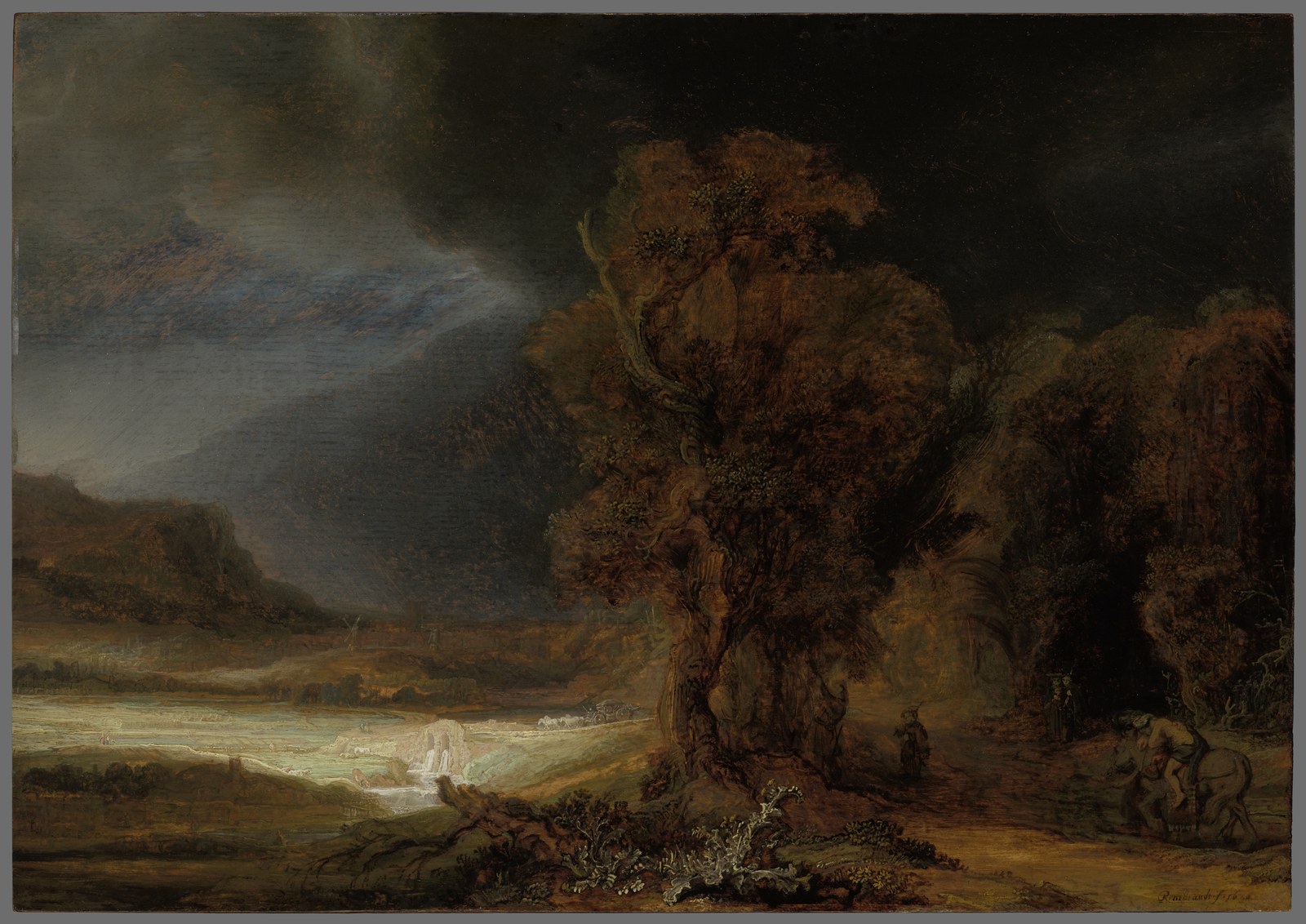
The Good Samaritan
Punchline: “And he said, He that shewed mercy on him. Then said Jesus unto him, Go, and do thou likewise.” (Luke 10:37, KJV) Story: A man traveling from Jerusalem to Jericho is robbed, beaten, and left half dead. A priest and a Levite pass by; a Samaritan stops, binds his wounds with oil and wine, carries him to an inn, pays for his care, and promises more on return. Jesus asks the lawyer which of the three was neighbor to the victim. Meaning: “Neighbor” is defined by merciful action, not ethnicity or religion; eternal life’s second great commandment is lived this way. Told in: Luke 10:30–37, occasion 10:25–29 Audience/Occasion: A lawyer testing Jesus asks what he must do to inherit eternal life, then presses him on who his neighbour is. On the road, likely in Judea.
The Friend at Midnight (Friend in Need)
Punchline: “And I say unto you, Ask, and it shall be given you; seek, and ye shall find; knock, and it shall be opened unto you.” (Luke 11:9, KJV) Story: A man goes to a friend at midnight begging three loaves for an unexpected guest. The friend, in bed with his children, first refuses — but finally rises and gives him all he needs rather than endure the persistent knocking. Meaning: Bold persistence in prayer is heard; how much more will the heavenly Father give the Holy Spirit to those who ask. Told in: Luke 11:5–8, application 11:9–13 Audience/Occasion: The disciples, immediately after Jesus teaches them the Lord’s Prayer.
The Rich Fool (Bigger Barns)
Punchline: “So is he that layeth up treasure for himself, and is not rich toward God.” (Luke 12:21, KJV) Story: A rich man’s fields produce abundantly; he plans to tear down his barns, build bigger ones, and tell his soul to relax and enjoy life. God calls him a fool: his life is demanded of him that very night, and his stored goods will belong to others. Meaning: Life does not consist in possessions; hoarding for self without being rich toward God is folly. Told in: Luke 12:16–21, occasion 12:13–15 Audience/Occasion: A man in the crowd asking Jesus to arbitrate an inheritance dispute; Jesus warns against covetousness.
The Watchful Servants (The Master’s Return)
Punchline: “Be ye therefore ready also: for the Son of man cometh at an hour when ye think not.” (Luke 12:40, KJV) Story: Servants wait with lamps burning and loins girded for their lord’s return from a wedding; blessed are those he finds watching — he will gird himself and serve them. Like a homeowner who would have watched had he known the thief’s hour. Meaning: Disciples must live in constant readiness for Christ’s sudden return. Told in: Luke 12:35–40 Audience/Occasion: The disciples, during the Perean ministry (after the rich fool and the “do not worry” teaching).
The Barren Fig Tree
Punchline (paraphrase): God’s patient call is “repent or perish”; God’s patience grants one more season of grace, but fruitlessness ends in judgment. Story: A man plants a fig tree in his vineyard; three years it bears nothing, so he orders it cut down — “why cumbereth it the ground?” The keeper pleads for one more year of digging and dunging; if it bears fruit, well — if not, cut it down. Meaning: Israel — and every unfruitful life — faces judgment, but God in mercy grants a final season to repent and bear fruit. Told in: Luke 13:6–9 Audience/Occasion: The crowds, after Jesus comments on Pilate’s slaughter of Galileans and the tower of Siloam — a call to repentance.
The Great Banquet (Great Supper)
Punchline (paraphrase): The invited all made excuses, so the master filled his house with the poor, maimed, and blind from the streets — and none of the originally invited will taste his supper. Story: A man makes a great supper and invites many; at suppertime all excuse themselves — a field, oxen, a new wife. Angered, the master sends his servant to bring in the poor, maimed, halt, and blind, then compels people from the highways and hedges until the house is full. Meaning: Those first invited (Israel’s leaders) forfeit their place through trivial excuses; the kingdom fills with the marginalized and outsiders. Told in: Luke 14:15–24 Audience/Occasion: Guests at a Sabbath dinner in a chief Pharisee’s house, after one guest exclaimed how blessed it will be to eat bread in the kingdom of God. Distinction: Luke’s Great Banquet (14:15–24) is a related but distinct parable from Matthew’s Wedding Banquet (22:1–14). Luke’s is set at a great supper rather than a royal wedding feast, carries no wedding-garment episode, and ends with the highways-and-hedges summons rather than Matthew’s sterner judgment on the refusers.
The Lowest Seat (Places of Honor)
Punchline: “For whosoever exalteth himself shall be abased; and he that humbleth himself shall be exalted.” (Luke 14:11, KJV) Story: When invited to a wedding, don’t take the highest seat lest a more honored guest arrive and you be moved down in shame; take the lowest seat, and the host may move you up with honor. Meaning: Kingdom humility — God exalts the humble and humbles the self-exalting. Told in: Luke 14:7–11, application 14:12–14 Audience/Occasion: The Sabbath dinner at the chief Pharisee’s house, as Jesus “marked how they chose out the chief rooms.”
Building a Tower / A King Making War (Counting the Cost)
Punchline (paraphrase): Count the cost before following: whoever does not forsake all he has cannot be his disciple. Story: Who builds a tower without first sitting down to count the cost, lest he lay the foundation and all mock the unfinished work? What king goes to war without first considering whether ten thousand can meet twenty thousand — else he sues for peace? Salt that loses its savor is fit for nothing. Meaning: Discipleship demands total, calculated commitment — cross-bearing and renunciation of all. Told in: Luke 14:28–33 Audience/Occasion: “Great multitudes” traveling with Jesus toward Jerusalem; he turns and addresses them on the cost of discipleship.
The Lost Coin
Punchline: “Likewise, I say unto you, there is joy in the presence of the angels of God over one sinner that repenteth.” (Luke 15:10, KJV) Story: A woman with ten silver coins loses one; she lights a lamp, sweeps the house, and searches diligently until she finds it, then calls her friends to rejoice with her. Meaning: God diligently seeks the lost, and heaven rejoices over one repentant sinner. Told in: Luke 15:8–10 Audience/Occasion: Pharisees and scribes murmuring that Jesus “receiveth sinners, and eateth with them”; second of the three “lost” parables.
The Prodigal Son (The Lost Son)
Punchline: “It was meet that we should make merry, and be glad: for this thy brother was dead, and is alive again; and was lost, and is found.” (Luke 15:32, KJV) Story: A younger son demands his inheritance, wastes it in riotous living, and ends feeding pigs, starving. He returns resolved to be a hired servant; his father sees him far off, runs, embraces him, and throws a feast. The elder brother, dutiful but resentful, refuses to join; the father pleads with him. Meaning: The Father’s lavish grace welcomes repentant sinners home; the self-righteous elder brother (the Pharisees) stands outside the joy he claims to deserve. Told in: Luke 15:11–32 Audience/Occasion: Same as the lost sheep and lost coin — Pharisees and scribes grumbling at Jesus’ fellowship with sinners; the parable’s real target is the elder brother.
The Shrewd (Unjust) Manager
Punchline (paraphrase): Use worldly wealth with eternity in view; “he that is faithful in that which is least is faithful also in much.” Story: A steward about to be fired for wasting his master’s goods shrewdly discounts his master’s debtors’ bills to win their favor for his future. The master commends his shrewdness — not his dishonesty, but his foresight. Meaning: Worldly people plan ahead for their future; God’s people should be at least as intentional, using money for eternal ends. Faithfulness in small things proves fitness for true riches. Told in: Luke 16:1–13 Audience/Occasion: Jesus’ disciples (Luke 16:1), with Pharisees “who were covetous” listening (16:14).
The Rich Man and Lazarus
Punchline (paraphrase): Those who reject Moses and the prophets would not be persuaded even if one rose from the dead. Story: A rich man feasts daily while the beggar Lazarus lies at his gate, longing for crumbs. Both die: Lazarus is carried to Abraham’s bosom; the rich man lifts his eyes in torment, begs for water and for Lazarus to warn his brothers. Abraham refuses both — a great gulf is fixed, and Scripture is sufficient witness. Meaning: Wealth misused and the poor neglected have eternal consequences; God’s word is sufficient revelation — those who reject it would reject even a resurrection. Told in: Luke 16:19–31 Audience/Occasion: The Pharisees, “who were covetous,” deriding Jesus after the shrewd manager teaching. Classification caveat: A minority tradition holds this is a true account rather than a parable, because the beggar is named — unlike every other parable. It is counted here as a parable, with the dispute noted.
The Unprofitable (Unworthy) Servants
Punchline: “So likewise ye, when ye shall have done all those things which are commanded you, say, We are unprofitable servants: we have done that which was our duty to do.” (Luke 17:10, KJV) Story: A master whose servant comes in from plowing doesn’t seat him at table; the servant first prepares the master’s supper. No thanks are owed for doing one’s duty. Meaning: Obedience is duty, not merit; disciples should serve without expecting extra credit. Told in: Luke 17:7–10 Audience/Occasion: The apostles, right after they ask him to increase their faith.
The Persistent Widow (Unjust Judge)
Punchline: “And he spake a parable unto them to this end, that men ought always to pray, and not to faint” — and “I tell you that he will avenge them speedily.” (Luke 18:1, 18:8, KJV) Story: A widow keeps coming to an unjust judge who “feared not God, neither regarded man,” demanding justice against her adversary. He finally grants it to stop her continual bothering. Meaning: If even a corrupt judge yields to persistence, how much more will the just God vindicate his elect who cry to him day and night — so pray persistently and don’t lose heart. Told in: Luke 18:1–8 Audience/Occasion: The disciples, during the journey to Jerusalem.
The Pharisee and the Tax Collector
Punchline: “I tell you, this man went down to his house justified rather than the other: for every one that exalteth himself shall be abased; and he that humbleth himself shall be exalted.” (Luke 18:14, KJV) Story: Two men go up to the temple to pray: a Pharisee who thanks God he is not like other men and lists his fasting and tithing, and a tax collector who stands afar off, beats his breast, and prays that God would be merciful to him, a sinner. Meaning: God justifies the humble penitent, not the self-righteous; the one who exalts himself is humbled. Told in: Luke 18:9–14 Audience/Occasion: “Certain which trusted in themselves that they were righteous, and despised others.”
The Ten Minas (Pounds)
Punchline: “For I say unto you, That unto every one which hath shall be given; and from him that hath not, even that he hath shall be taken away from him.” (Luke 19:26, KJV) Story: A nobleman going to receive a kingdom gives ten servants one mina each with orders to trade with it until he returns. Citizens hate him and send a delegation rejecting him. On return, servants report gains — ten minas earns ten cities, five minas five cities; one hid his mina in a napkin and loses it to the ten-mina servant. The rebels are slain. Meaning: Faithful stewardship during Christ’s absence is rewarded with real authority at his return; rejection of the King ends in judgment. Told in: Luke 19:11–27 Audience/Occasion: The crowd near Jericho, as Jesus approaches Jerusalem; occasioned by the expectation of an immediate kingdom. Distinction: Distinct from Matthew’s Talents (25:14–30), though the theme overlaps — Luke’s uses minas rather than talents, sets the reward as cities, and is occasioned by the crowd’s expectation that the kingdom would appear immediately.
A note on John
John’s Gospel contains no parables in the formal sense — no “the kingdom of heaven is like…” stories. It instead uses extended metaphors and allegories: the Good Shepherd (John 10:1–18), the Vine and the Branches (John 15:1–8), and the Bread of Life discourse (John 6:32–58). These are traditionally classified as discourses, not parables, and are excluded from the count above.
Borderline cases (not counted)
Some lists include items counted here as sayings or illustrations rather than parables; totals in published lists range from ~35 to ~46 depending on these calls:
- The Bridegroom and fasting (Matthew 9:14–15; Mark 2:18–20; Luke 5:33–35) — functions as a saying/illustration.
- The Unclean Spirit returning (Matthew 12:43–45; Luke 11:24–26) — an illustrative warning about the empty swept house; a parable by some, a similitude by others.
- The Strong Man (Matthew 12:29; Mark 3:27; Luke 11:21–22) — a one-line parabolic saying.
- Tree and Its Fruit (Matthew 12:33–35; Luke 6:43–45) — proverbial teaching rather than a narrative parable.
Source notes
Sources consulted during research (observed 2026-09-26):
- Parable reference table (Berean Christian Bible Study Resources): http://www.bcbsr.com/survey/jpbl.html
- “A List of the Parables” (Trustworthy Word, citing gotquestions.org): https://www.trustworthyword.com/a-list-of-the-parables
- Parables of Jesus chart with audience/occasion (Logos Sermons): https://sermons.logos.com/sermons/47591-parables-of-jesus-chart?sso=false
- Chronological parables list (PDF): https://img1.wsimg.com/blobby/go/b75adebb-e07c-499f-b850-aca6b0c981ef/downloads/46%20Parables%20Of%20Jesus%20Spreadsheeted.pdf
- KJV punchline wording verified via Bible Gateway search results and bible.com compare pages (Luke 15:32, Matthew 25:40, Matthew 25:29, Luke 19:26, Luke 18:1–14, Luke 10:29–37, Matthew 20:1–16, Matthew 18:21–35, Luke 15:7, Luke 11, Matthew 25:13–30, Luke 12:21, Luke 14:11–21, Matthew 21:42, Matthew 22:14, Luke 7:47–50, Matthew 7:24–27, Luke 17:5–10, Matthew 21:31–46)
Limitations
- No entry was cut during editorial conversion; all 43 parables were carried over with their verification flags intact.
- The exact wording of entries marked Punchline (paraphrase) was not individually checked against a Bible text on 2026-09-26; only the chapter:verse references and the direct KJV quotations were verified.
- Punchline quotes use KJV wording only; WEB wording was not checked.
- Audience/occasion notes follow the standard narrative context of each passage but were not re-verified verse-by-verse.
- No single authoritative parable list exists; published counts range from ~35 to ~46 depending on whether borderline sayings are included. The 43-count used here follows the standard Berean/Trustworthy Word inventory.
- Classification is disputed for two included entries: the Sheep and the Goats (Matthew 25:31–46, judged by some a judgment discourse rather than a parable) and the Rich Man and Lazarus (Luke 16:19–31, judged by a minority tradition a true account because Lazarus is named). Both are noted inline.
- Matthew’s Wedding Banquet and Luke’s Great Banquet are treated as distinct parables (related, not identical); likewise Matthew’s Talents and Luke’s Ten Minas are treated as distinct. The distinction notes are preserved inline.